



Thang Long Imperial Citadel: Exploring Vietnam’s Historic Heart
Thang Long Imperial Citadel, with over a thousand years of history, stands as a symbol of prosperity and power of the Ly, Tran, Le and Nguyen dynasties. Recognized by UNESCO as a World Cultural Heritage site, it is an unmissable destination for exploring the history and culture of Hanoi, Vietnam.

Contents
History of Thang Long Imperial Citadel
History of Thang Long Imperial Citadel
The history of Thang Long Imperial Citadel is deeply intertwined with the history of Vietnam itseld. Originally constructed in the 11th century during the Ly Dynasty, it served as the political and cultural center of the country for centuries.
Throughout its history, the citadel underwent numerous expansions, renovations, and changes under diffirent rulling dynasties, including the Tran, Le, and Nguyen Dynasties. Each dynasty left its mark on the citadel, shaping its architecture and significance.
During the colonial period, the citadel suffered significant damage, particularly during the French colonial rule in the late 19th and early 20th centuries. However, efforts to preserve and restore this historical site began in the late 20th century, culminating in its recognition as a UNESCO World Heritage Site in 2010.
Today, Thang Long Imperial Citadel stands as a testament to Vietnam’s rich cultural heritage, attracting visitors from around the world to marvel at its ancient architecture and explore its storied past.
Important historical milestones of Thang Long Imperial Citadel
Here are some important historical milestones of Thang Long Imperial Citadel:
11th Century (1010): Establishment of the capital Thang Long – Dai La Citadel, marking the beginning of the cultural heritage of Thang Long – Hanoi today under the Duy Tan Dynasty.
13th Century (1225): King Ly Cong Uan expanded and fortified the Imperial Citadel, laying the foundation for its strong development.
15 th Century (1428): King Le Loi defeated the Ming army, establishing the Later Le Dysnasty. The citadel was renamed Dong Kinh, showcasing the strength of Vietnam and the prosperity of the Imperial Citadel.
19th Century (1802): The Great Nam national history reveals that King Gia Long renamed the capital to Hanoi. This action indicated the continued development and restrcuturing of the city.
20th Century (1945): The Great National Ceremony of Independence, proclaiming Vietnam’s Independence, was held at the Imperial Citadel. This event marked a significant turning point in the nation’s history.
21st Century (2010): UNESCO recognizes Thang Long Imperial Citadel as a World Cultural Heritage site, confirming its important position in the history and culture of Vietnam.
Architecture of Thang Long Imperial Citadel
The architecture of Thang Long Imperial Citadel reflects the cultural and historical influences spanning over a millennium. Here are some key features:
Layout: The citadel follows traditional Vietnamese architectural principles. It features a series of concentric walls and gates forming layers of defense and administrative zones.
Main Gates: The citadel is accessed through several impressive gates, including Doan Mon ( main gate). Besides, this gate served as the entrance for the royal family and important officials.
Palaces and Pavilions: Within the citadel, there are various palaces, halls, and pavilions constructed in traditional Vietnamese architectural style. Additionally, these structures are often adorned with intricate wood carving and decorative motifs.
Courtyards and Gardens: The layout includes spacious courtyards and lush gardens, providing peaceful retreats within the bustling citadel complex.
Water Systems: The citadel incorporates water systems such as ponds, canals, and wells, essential for supplying water to the resident and for defensive purposes.
Watchtowers and Bastions: Strategically positioned watchtowers and bastions dot the perimeter of the citadel, offering vantage points for defense and surveillance.
Restoration Efforts: Over the years, extensive restoration efforts have been undertaken to preserve and restore the citadel’s architectural heritage. These efforts ensure its continued significance as a cultural landmark.
Overall, the architecture of Thang Long Imperial Citadel is a testament to the ingenuity and craftsmanship of Vietnamese artisans throughout the centuries. It reflects both the practical needs of defense and governance and the artistic sensibilities of the era.
>>>See more: One Pillar Pagoda: The most unique architecture in Vietnam.
The meaning of Thang Long Imperial Citadel
Thang Long Imperial Citadel, an emblem of Vietnam’s enduring heritage, encapsulates centuries of history, culture, and resillience. Nestled in the heart of Hanoi, this ancient fortress stands as a testament to the nation’s rich tapestry of traditions and triumphs.
From its inception as the capital of the Ly Dynasty in the 11th century to its UNESCO recognition as a World Cultural Heritage Site, Thang Long Citadel has borne witness to the ebb and flow of Vietnam’s story. Its formidable walls and majestic gates whisper tales of imperial grandeur and architectural prowess, inviting visitors to embark on a journey through time.
Beyond its historical significance, Thang Long Imperial Citadel serves as a beacon of national pride and identity. It symbolizes the spirit of the Vietnamese people, resillient in the face of adversity and steadfast in preserving their cultural legacy.
Today, Thang Long Imperial Citadel continues to captivate the imagination of travelers from around the globe. It offers a glimpse into Vietnam’s glorious past and a promise of cultural enrichment. As each stone speaks volumes of bygone eras, Thang Long Citadel stands as a living testament to the timeless allure of Vietnam.
What are the main attractions to visit within the Imperial Citadel of Thang Long?
The main gate – Doan Mon
Constructed with stones and bricks. Doan Mon stands south of Kinh Thien Palace and aligns perfectly with the Hanoi Flag Tower. The main gate is characterized by its U-shaped strcuture and five symmetrically placed gates along the “righeousness axis”. It features a watchtower gazebo design with three rolling arches, providing both elegance and robust load-bearing capabilities.

Today, Doan Mon remains an iconic destination within the Imperial Citadel of Thang Long, attracting countless tourists eager to admire its impressive and intricate architectural design and capture unforgettable monents.
Kinh Thien Palace
Built during the Ly Danasty in the 11th century, Kinh Thien Palace served as the primary throne hall where kings held court and conducted important ceremonies.
Characterized by its imposing structure and intricate architectural details, Kinh Thien Palace was the focal point of political and cultural activities for centuries. Its expansive halls and elevated platform symbolize the power and prestige of the Vietnamese monarchy during its heyday.
Visitors to Kinh Thien Palace can marvel at its majestic facade adorned with ornate carving and sculptures, reflecting the artistic martery of ancient Vietnamese craftsmen. Inside, the palace’s spacious interior and lofty ceiling evoke a sense of awe and reverence, transporting visitors back in time to a bygone era of royal splendor.
Hanoi Flag Tower
Hanoi Flag Tower, an iconic symbol of Vietnam’s capital city, stands tall as a historic landmark within Thang Long Imperial Citadel. Built in 1812 during the Nguyen Dynasty, this imposing structure served as a military observation post. It also housed the royal flags, signifying the sovereignty of the Vietnamese nation.
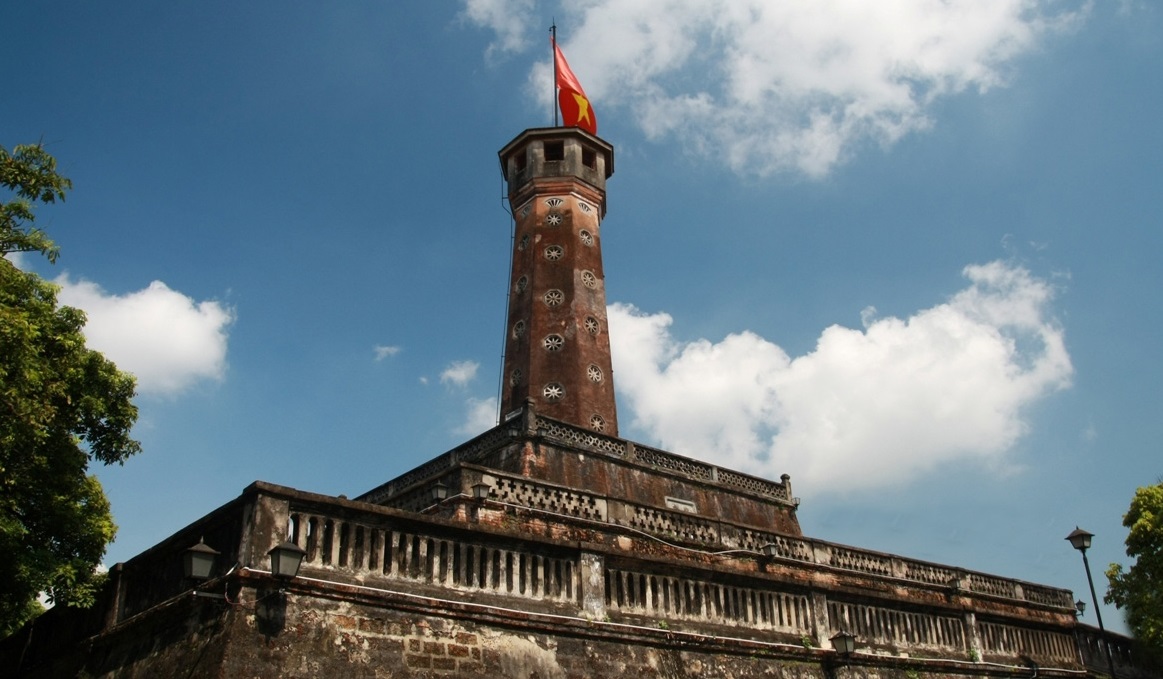
With its distinctive architectural design and strategic location, Hanoi Flag Tower has become a beloved symbol of Hanoi’s rich cultural heritage and a popular attraction for visitors exploring the city’s historical treasure.
Northern Gate – Cửa Bắc
Chinh Bac Mon, also known as Cua Bac, stands on Phan Dinh Phung Street. It is the sole surviving entrance to the Hanoi Citadel under the Nguyen Dynasty, which was reconstructed in 1805 atop the Le Dynasty’s Northern Gate foundation.
Perched atop the gate is a watch tower gazebo where the imperial troops had a clear view of both the citadel’s surroundings and its interior, allowing them to monitor the enemy’s movements.

Today, partial restoration is ongoing to honor Hanoi Citadel’s history and figures like Nguyen Tri Phuong and Hoang Dieu, who heroically sacrificed during the defense of Thang Long Imperial Citadel against the French.
Archaeological sites
Within this region, archaeologists have uncovered diverse architectural structures and artifacts spanning a timeline of over 1300 years. These layers of relics accumulated quite continuously over time, beginning with the Dai La Dynasty (7th – 9th century) and ending with the Nguyen Dynasty (1802 – 1945 ). This remarkable feature greatly contributes to the exceptional value and distinctiveness of these relics.
Experience the super exciting ” Decoding Thang Long Imperial Citadel” tour
Experience the exhilarating ” Decoding Thang Long Imperial Citadel” tour, where history comes alive as you uncover the secrets of this ancient fortress. Led by knowledgeable guides, this immersive journey takes you on a captivating exploration of the citadel’s storied past, from its origins in the 11th century to its significance in modern-day Vietnam.

The Decoding Thang Long Imperial Citadel night tour attracts a large number of tourists. The tour lasts for 90 minutes, starting from Doan Mon Gate and continuing to the archaeological site. Departure times for the tour are at 6:00 pm, 6:30 pm and 7:00 pm every Saturday and Sunday. During the tour, visitors will admire the enchanting royal court space illuminated by lanterns and learn about ancient dynasties through the architecture, precious artifacts, and enjoy royal court dances.
The esential information needed when visiting Thang Long Imperial Citadel
Address and opening hours
Thang Long Imperial Citadel is located at 19C Hoang Dieu Street, Ba Dinh Distric, Hanoi, Vietnam.
As for the opening hours, the citadel is typically open to visitors from 8:00 am to 5:00 pm, Tuesday through Sunday. It is closed on Mondays for maintenance. However, it is a good idea to double-check the opening hours before your visit as they may vary depending on public holidays or special events.
Ticket price
As of my last update, ticket prices for Thang Long Imperial Citadel in Hanoi, were as follows:
- For adults: 30,000 VND (aproximately $1.30 USD)
- For children (ages 7 to 15): 15,000 VND ( approximately $0.65 USD)
- Children under 6 years: Free admission
Please note that ticket prices may have changed since my last update. It is a good idea to verify the current prices before your visit. Additionally, there may be discounts available for Vietnamese citizens or certain groups. It is worth inquiring about any special rates that may apply.
Some things to keep in mind when visiting Thang Long Imperial Citadel
- Respectful Attire: Dress modestly and respectfully, covering shoulders and knees. This is espacially important when visiting religious or historical sites.
- Photography Rules: While photography is generally allowed, there may be restrictions in certain areas. Always observe signage and instructions regarding photography.
- Mind your Belongings: Keep an eye on your belongings and be mindful of pickpockets, especially in crowded areas.
- Respectful behavior: Be respectful of the site’s historical and cultural significance. Avoid touching artifacts of climbing on strcutures unless permitted.
In conclusion, Thang Long Imperial Citadel stands as a timeless testament to Vietnam’s rich history and cultural heritage. With its majestic architecture, storied past, and significance as a UNESCO World Heritage Site, the citadel offers visitors a captivating journey through centuries of Vietnam civilization.
Don’t forget that VNGTours has a variety of exciting tours awaiting your discovery!
>>>Booking now: Hanoi 5 day – Experience !!!



-
 ELITE OF THE SEA: 3days/2nights - Discovery Halong – Lan Ha Bay
 -
ELITE OF THE SEAS: 2days/1night - Discovery Halong – Lan Ha Bay
$650$630 -
NINH BINH DAY TRIP FROM HANOI: HOA LU - TAM COC - MUA CAVE
$50$45 -
ELITE OF THE SEAS - HALONG BAY AND LAN HA BAY DISCOVERY - 4 Days/3 Nights
$800$750 -
STELLAR OF THE SEA: DISCOVERY HALONG BAY – LAN HA BAY 2DAYS/ 1NIGHT $700